What is Oxidation and Reduction?
Oxidation Firing
Oxidation firing happens when there is plenty of oxygen in the kiln chamber for complete fuel combustion.
How it works: Oxygen flows freely, stabilizing metal oxides in glazes. Electric kilns naturally fire in full oxidation because they use heating elements instead of burning fuel. Gas or wood kilns can also oxidize if given ample airflow and burners adjusted for a clean burn.
Visual results: Produces bright, clean, predictable, and vibrant finishes. Copper typically yields vibrant greens and blues, while iron produces tans and rusty browns.
Reduction Firing
Reduction firing happens when the kiln environment is deprived of oxygen due to restricted airflow, heavy fuel input, or closed dampers.
How it works: Incomplete combustion creates carbon monoxide, which actively pulls oxygen atoms out of the glaze and clay body itself. This process requires a flame (such as gas, oil, or wood) and cannot be easily achieved in a standard electric kiln.
Visual results: Produces rich, earthy, organic, and often unpredictable results. Iron can shift to deep celadon greens, blues, or blacks, while copper can transform into deep, striking reds. It also brings out natural iron speckling in clay bodies.
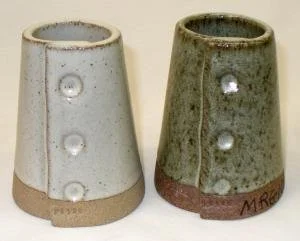
left image oxidation, right reduction